Driving to Croatia
Despite relatively short flight times from most European cities, many people still choose to drive to Croatia — whether for flexibility, to bring more luggage, or simply to make the journey part of the adventure. How long the drive takes depends on where you’re starting from.
From the UK, plan on at least two full driving days to reach northern Croatia (Istria or the Kvarner Bay area), and a third day if you’re heading to the Dalmatian coast. The quickest and most cost-effective route from the UK passes through Germany, taking advantage of the excellent autobahn network. The typical routing is: Eurotunnel or Channel ferry to Calais, then through Belgium and Germany (following the A3 via Cologne and Frankfurt towards Passau), into Austria, skirting Salzburg or Graz, then across Slovenia to the Croatian border.
An alternative — particularly good if you’re heading to Istria — is to drive through France, cross into Italy via the Mont Blanc tunnel, and then head east along the Italian motorways towards Venice and Trieste, crossing Slovenia into Croatia. This route adds the possibility of a stopover in the Alps or Venice.
For those based in southern Germany, Austria, Switzerland or northern Italy, the journey is considerably shorter — often just a single day’s drive.
Driving in Croatia
Croatia’s road network is of a very good standard. In 2023, the World Economic Forum ranked Croatia 12th out of 141 countries for road infrastructure. The country has an extensive motorway (autocesta) system linking Zagreb to all major coastal destinations — including Pula, Rijeka, Zadar and Split, with the main motorway south to Dubrovnik currently completed as far as Ploče, around 100km north of Dubrovnik.
One major recent development is the Pelješac Bridge, which opened in July 2022, allowing drivers to bypass the short stretch of Bosnia (the Neum corridor) that previously interrupted the coastal route — removing the need for passport checks along the way.
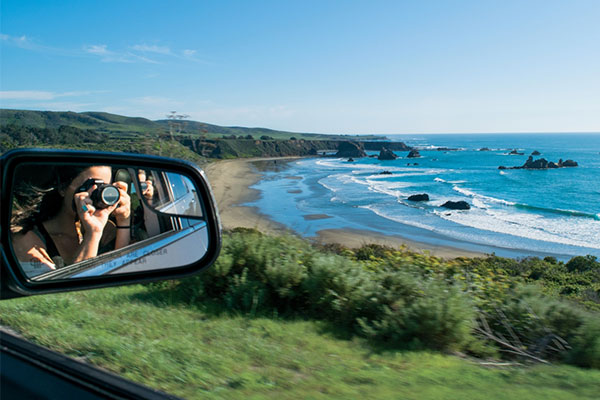
If you prefer a scenic alternative to the motorway, the Adriatic coastal road (Jadranska magistrala, officially road D8) runs the length of the coast from Rijeka to Dubrovnik and is one of the most beautiful drives in Europe. Allow extra time — it’s winding and slow in places, especially in summer.
Tolls
Croatia’s motorways operate on a distance-based toll system. You take a ticket when entering and pay when exiting — so don’t lose it. Tolls can be paid in cash (euros) or by debit/credit card. As a rough guide, the motorway from Zagreb to Split costs around €26 one way. A pre-paid SMART card is also available, offering a 10% discount on toll charges, though you need to register in advance.
Note: in early 2027, the toll system is due to switch to electronic number plate recognition, with payment via app or at retail points — so the ticket system will eventually be phased out.
You’ll also need motorway vignettes when passing through Austria (currently €9.30 for one day, €12.40 for ten days) and Slovenia (€16 for seven days, €32 for a month).
Driving rules
Croatians drive on the right. Speed limits are 50 km/h in built-up areas, 90–110 km/h on main roads outside towns, and 130 km/h on motorways. The blood alcohol limit is 0.05% — the same as Scotland, and lower than England and Wales. Police do carry out routine checks, so it’s best not to drink at all if you’re driving.
You are required to carry a high-visibility vest, warning triangle, and first aid kit. In winter months (November to April), snow chains may be compulsory if weather conditions require it.
For up-to-date route planning and toll calculations across the whole journey, viamichelin.com is an excellent free resource.